
Refinishing vs Refacing: Which Fits Your Kitchen? 9 Scenarios
Last modified: October 29, 2026
Quick answer
Choose refinishing if your doors are in good shape and you like their style; you just want a new colour. Choose refacing if your boxes are solid but the doors are damaged, peeling thermofoil or a style you no longer like. If the boxes or layout are the problem, consider modifications or replacement instead.
Refinishing and refacing both update your kitchen cabinets without tearing them out. The difference comes down to one question: are your current doors worth keeping? Knowing the definitions helps, but it’s often easier to decide when you see how each option fits a real situation. Here is how refinishing vs refacing plays out in 9 common scenarios.
The scenarios below are hypothetical examples, not specific client projects. They’re based on the kinds of kitchens homeowners commonly ask about, and they show how the choice usually plays out. Your own kitchen may land somewhere in between.
Refinishing vs refacing: the short version
- Refinishing keeps your existing doors, drawer fronts and cabinet boxes and changes the colour and finish. Doors and drawer fronts are sprayed in our shop with an industrial two-component coating and bake-cured, and the frames are finished in your home. It’s about four days of work in your home, with a 7 to 10 day gap while doors are in the shop, and it comes with a written 3-year warranty.
- Refacing keeps your existing cabinet boxes and replaces the doors and drawer fronts with brand-new ones. The frames are finished to match. New doors carry a written 5-year warranty.
In both cases your layout, cabinet boxes and countertops can stay where they are. So the real decision is about the condition and style of your doors.
Scenarios where refinishing fits
Scenario 1: Solid oak cabinets in a dated colour
Imagine a 1990s kitchen with solid oak Shaker or flat-panel doors. The doors open and close well, nothing is swollen, and the layout works for the family. They just look tired and orange next to newer floors.
This is a good fit for kitchen cabinet refinishing. The doors are in good shape, so there’s no need to replace them. A new colour changes the look of the room while keeping cabinets the family already likes using. One thing to know: oak has an open grain, and that texture can still show through a painted finish.
Scenario 2: Getting ready to sell
Now picture homeowners planning to list their house. The cabinets are sound but the colour feels dated in listing photos. They want a fresh, neutral look without a long project.
Refinishing usually suits this situation, since the work in the home is about four days and the doors are done in the shop. A soft white, warm grey or greige gives buyers a clean starting point.
Scenario 3: Good doors in a style you still like
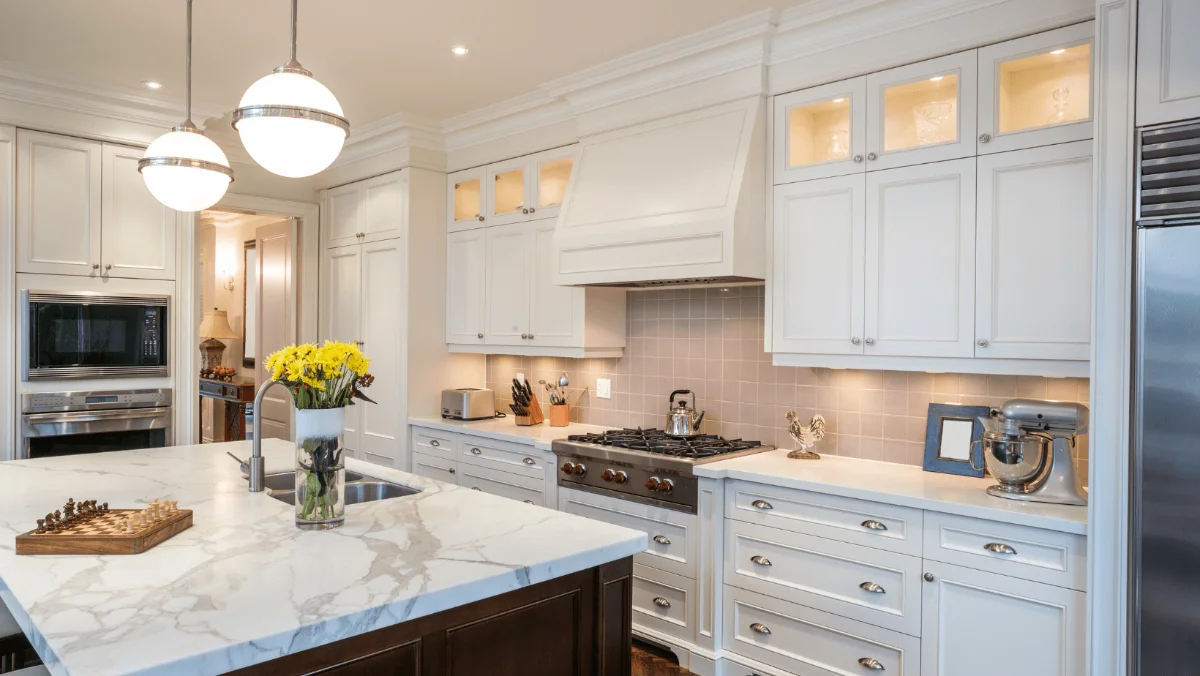
Some kitchens have well-made doors in a classic style, like Shaker or a simple recessed panel. The owners like the door style. What they don’t like is the colour, or the finish has worn thin around the handles.
When the door style already suits you, refinishing gives you a new colour without paying for new doors.
Scenarios where refacing fits
Scenario 4: Swollen or peeling doors
Picture a kitchen where the doors beside the dishwasher and sink have swollen from moisture, or where the surface film on the doors is lifting at the edges. The cabinet boxes are still solid.
A new finish can’t fix a door that has swelled or delaminated. This is where cabinet refacing makes sense: the boxes stay, and the damaged doors and drawer fronts are replaced with brand-new ones.
Scenario 5: You want a different door style
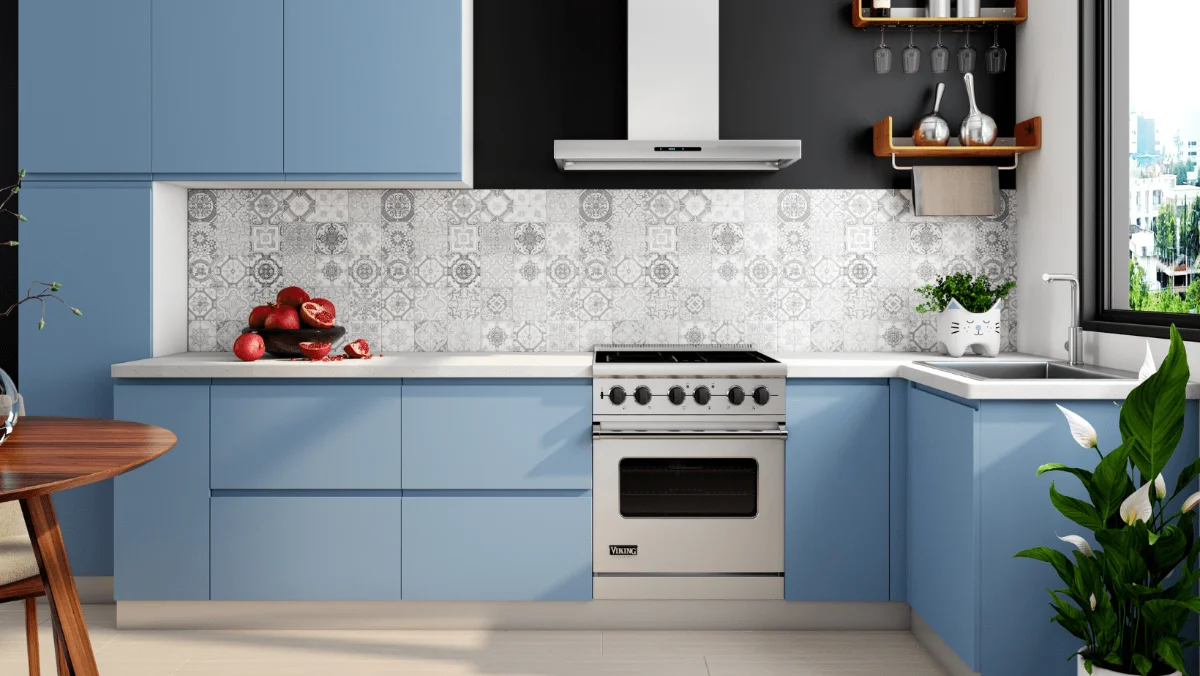
Imagine a home with ornate raised-panel doors with arched tops. The owners want a clean, modern look with slab doors, or a simpler Shaker style. A new colour on the old doors would still leave the arches.
Refacing is the way to change the door style itself, because the doors are what’s being replaced.
Scenario 6: Doors that don’t match
Some kitchens have been patched over the years. A few doors were replaced, some don’t line up, and the styles no longer match. New doors and drawer fronts across the whole kitchen give it a consistent look again.
Scenarios that call for a different approach
Scenario 7: A hands-on homeowner
Some people like to do part of the work themselves. Our DIY Kitchen Update Kit splits the job: we professionally refinish your doors and drawer fronts in our shop, and you paint the frames with the materials and guidance in the kit. The Novice Kit includes removal and reinstallation by our team, while the Expert Kit leaves removal, delivery, frame painting, pickup and reinstallation to you.
Scenario 8: The layout needs work too
If the cabinets look tired and the storage doesn’t work, either option can be combined with changes. Organizers such as pull-outs and blind-corner solutions, or carpentry such as converting doors to drawers or adding ceiling-height cabinets, can be part of a refinish or reface.
Scenario 9: The cabinet boxes themselves are failing
If boxes are badly water-damaged, sagging or falling apart, neither refinishing nor refacing is the right answer, because both rely on keeping the existing boxes. In that case, new cabinets may be needed. An in-home assessment will tell you which situation you’re in.
What about cost?
Because refacing includes brand-new doors and drawer fronts, it generally involves a larger investment than refinishing the doors you already have. Beyond that, every kitchen is different, and there’s no one-size-fits-all price. Our kitchen cost calculator gives you a starting point for both options.
Not sure which scenario is yours?
Most kitchens fit one of these patterns, but plenty sit in between. Our estimators can look at your doors and boxes, check for swelling or damage, and walk you through both options side by side. Book a free in-home quote and you’ll get clear, line-item pricing for the approach that suits your kitchen.
Frequently asked questions
Can I refinish some doors and replace others?
Mixing refinished and new doors in the same run can make it hard to get an exact match in look and texture. If only a few doors are damaged, talk it through during your in-home quote so we can recommend the approach that will look consistent.
Which lasts longer, refinishing or refacing?
Both are built to last when the work is done properly. Refinishing comes with a written 3-year warranty, and the new doors used in refacing carry a written 5-year warranty.
Do I need new countertops if I reface or refinish?
No. Both options keep your existing cabinet boxes, so your countertops can stay in place. If you do want new counters, they can be coordinated through FloForm as part of the project.


